

eco Complaints Office
Combatting Illegal Internet Content and Dedication to Youth Media Protection
Since 1996, we at the eco Complaints Office have been fighting successfully against illegal content on the Internet and are committed to ensuring that illegal content is taken down and criminal offences are reported to the authorities. In fulfilling this commitment, cooperation with the various stakeholders and neutral and transparent processes are of equal importance.
Our work is based on voluntary cooperation with society as a whole, and its fundament is that of self-regulation of providers and the engagement of Internet users. From the outset, eco has cooperated with law enforcement agencies in the fight against child sexual abuse material and other illegal Internet content.
We are also the contact partner for eco members, the state, society and politics.
Internet users can report suspected illegal Internet content to the eco Complaints Office, free of charge and anonymously: for example, under international.eco.de/eco-complaints-office. The Complaints Office’s lawyers then assess whether the reported content violates German law and take appropriate measures if necessary.

The eco Complaints Office can also be reached via the portal https://www.internet-beschwerdestelle.de/en, which it operates together with the German Association for Voluntary Self-Regulation of Digital Media service providers (FSM), as well as via the German information platform for young people at juuuport.de/melden.
Statistics
In 2025, the eco Complaints Office reviewed a total of 51,359 cases regarding potentially criminal or youth media protection-related Internet content. Around 58 per cent of these cases were deemed actionable by the eco Complaints Office (“actionable” complaints).
Compared with the previous year, the number of actionable complaints has almost tripled, reaching a new high of 30,035 cases.
The actionable complaints were forwarded – depending on the type of violation and server location – to law enforcement agencies, content providers, host or platform providers and/or members of the INHOPE network.
In terms of content, the majority of complaints concerned depictions of the sexual abuse and sexual exploitation of minors, defined as Child Pornography in Section 184b of the German Criminal Code (StGB). 8.03 per cent of actionable complaints concerned other types of content (for example, youth pornography or cybergrooming, anti-constitutional content, depictions of violence, and other content endangering youth and impairing development). Youth pornography (2,254 cases) accounts for the largest share of this “other content” category.

The proportion of anti-constitutional content was once again notably low, at around 0.03 per cent of all actionable complaints. What is striking in this regard is the significantly lower proportion of relevant complaints: nearly 99 per cent of the reported potentially anti-constitutional content turned out, upon legal review, to be permissible and protected under freedom of expression.
Overall, 98.58 per cent of the illegal Internet content flagged by the Complaints Office – such as depictions of sexual abuse, incitement of the masses, and depictions of violence – were removed worldwide. This demonstrates once again that self-regulation works – also internationally. Just under three-quarters of the reported URLs (74.42 per cent) were hosted outside Germany.
Network and Committee Work/Political Engagement in 2025: An Excerpt
INHOPE (International Association of Internet Hotlines)
INHOPE is the international umbrella organisation of Internet hotlines that handle complaints concerning depictions of the sexual abuse of minors. Founded in 1999 by eco among others, the network has since grown to include 57 hotlines across six continents.
The eco Complaints Office regularly participates in the exchange of knowledge and experience within the network, including through direct collaboration with partner hotlines. Of particular note for the reporting year was the visit to colleagues in Luxembourg as well as a visit from a Portuguese colleague.
In addition, eco has contributed to the INHOPE-coordinated (further) development of the “Universal Classification Scheme”. This is a classification system for assessing depictions of the sexual abuse and sexual exploitation of minors. It is intended to provide hotlines, law enforcement agencies and service providers with a standardised, descriptive means of categorising (“labelling”) such content.

A “translation” of the labels describing the content into legal categories – in view of differing legal situations internationally – can then enable a (criminal) legal assessment of the content for each participating country. Among other things, this is intended to allow prioritisation in the processing of reports. eco contributes to the further development of the “Universal Classification Scheme” through participation in the associated Expert Council by Sebastian Fitting, Senior Consultant at the eco Complaints Office.
Since November 2024, Sebastian Fitting has been a member of the INHOPE Board.
Safer Internet Centre Deutschland
As (co-)operator of the portal internet-beschwerdestelle.de/en, the eco Complaints Office has been part of the German Safer Internet Centre (saferinternet.de) since 2008, which includes eco, FSM, jugendschutz.net, “Nummer gegen Kummer” and klicksafe.de (operated by the State Media Authority of Rhineland-Palatinate).
The cooperation of the German Safer Internet Centre also included joint awareness-raising activities in 2025:
On Safer Internet Day, a joint expert chat took place on the topic “No Likes for Lies: What Can Be Done About Populist and Extremist (Deep) Fakes on the Internet? – What Professionals and Parents Need to Know!”. In front of around 400 participants, experts from the Safer Internet DE network provided information on the challenges and options for dealing with populist and extremist (deep) fakes online. Legal aspects were also addressed, including the assessment of content in the context of applicable laws.

On the occasion of the European Day on the Protection of Children Against Sexual Exploitation and Sexual Abuse on 18 November 2025, the hotlines of eco, FSM and jugendschutz.net hosted an online event entitled “Together Against Sexualised Violence Online – What Professionals Need to Know”. This webinar had a very large response and reach with around 500 participants.
In 2025, the German Safer Internet Centre also continued to receive financial support from the European Union as part of the “Digital Europe Programme”. The partners of the Safer Internet Centre intend to continue this cooperation and have therefore submitted another application for continued funding in autumn 2025.
Cooperation on Youth Media Protection with Other Relevant Actors
In addition, the eco Complaints Office was in contact with other relevant actors in the field of youth media protection. The following activities can be highlighted in this regard:
In proceeding to build on the work of previous years, collaboration with supervisory bodies and self-regulatory organisations on common and specific topics was continued. Examples included the State Media Authority of North Rhine-Westphalia (LfM) and USK online.
The German Federal Agency for the Protection of Minors in the Media (BzKJ) is a key player in ensuring and further developing youth media protection and a long-standing network partner of the eco Complaints Office. BzKJ and the eco Complaints Office work together in partnership in various areas and at different levels. In addition to cooperation within the framework of the German Federal Criminal Police Office (BKA) collaboration, employees of the eco Complaints Office have been appointed as associate members to the Federal Review Board for Media Harmful to Minors for many years. In addition, representatives of the eco Complaints Office participated in the BzKJ’s “Future Workshop” on the topic of “Sexual Violence and Harassment in the Digital Space”.

The eco Complaints Office is part of the partner network of the German Office for the Enforcement of Children’s Rights in Digital Services (KidD), which was founded in 2024 and is based at the BzKJ. During the reporting year, a joint event organised by KidD and ECPAT Germany e. V. on the topic of “Sexualised Violence Against Minors Online” took place, in which Kira Peek, Senior Consultant at the eco Complaints Office, participated.
In 2025, “priority flagging” was also an essential element of the eco Complaints Office’s effective work. The special reporting channels for trustworthy whistleblowers enable direct interaction between hotlines and providers, which simultaneously has a positive effect on reaction times.
Law Enforcement Agencies
Law enforcement is an important element in combatting illegal Internet content. The eco Complaints Office works within the framework of complaint processing to ensure that illegal content is taken down and that criminal offences are reported. Beyond complaint processing, the Complaints Office also cooperates with law enforcement agencies at both the federal and state levels.
In the fight against depictions of the sexual abuse of children, close and effective cooperation with the German Federal Criminal Police Office (BKA) takes place, with this also reflected in the German federal government’s report on the success of deleting Child Pornographic web content. The most recent report, published in June 2025, once again showed that the principle of “take-down instead of blocking” and the cooperation of the hotlines, the BKA and the Federal Agency for the Protection of Children and Young People in the Media (BzKJ) present very effective means for combatting illegal Internet content.
In the area of state protection offences, the eco Complaints Office cooperates with police authorities and public prosecutor offices at both the federal and state levels. Since 2019, eco has also been a member of the North Rhine-Westphalian initiative “Prosecute, don’t just delete”, and thereby actively supports the rigorous criminal prosecution of hate speech on the Internet.
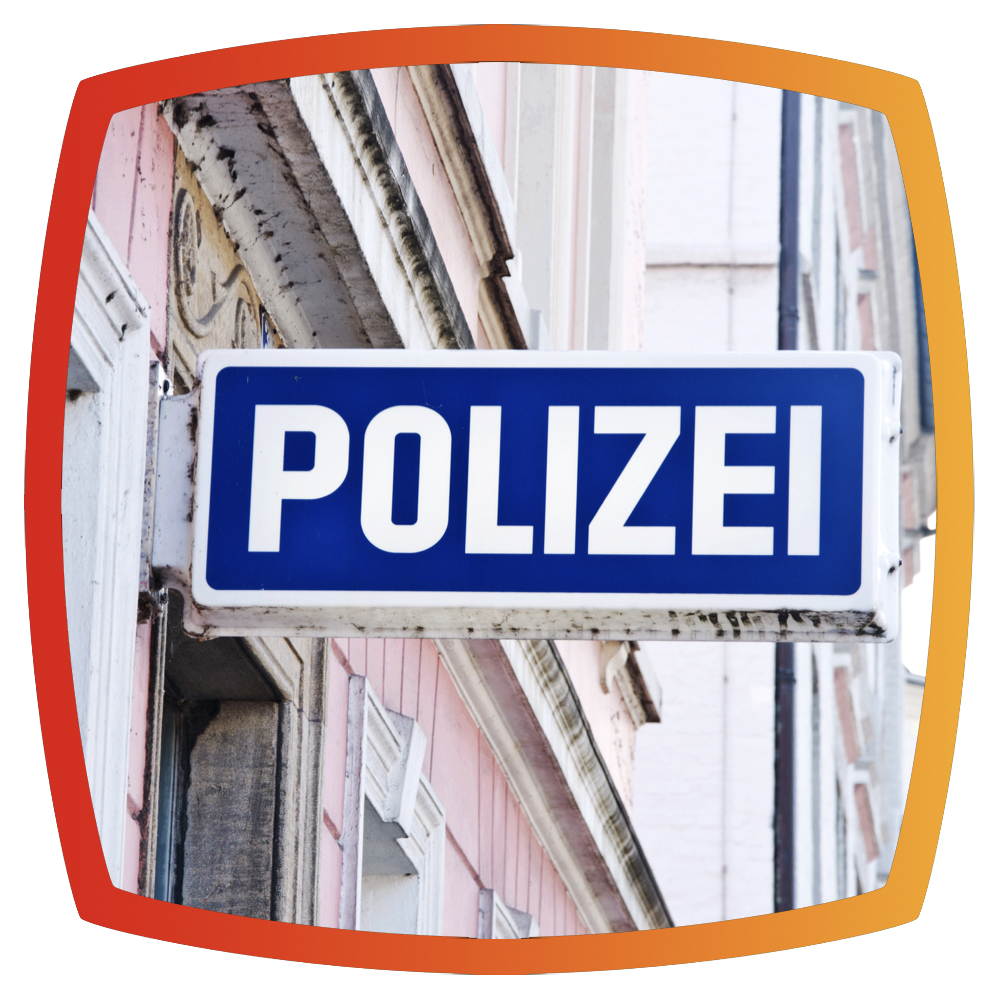
In addition, the eco Complaints Office cooperates closely with the police at the local level. Of particular note for 2025 is the collaboration with the Cologne Police, which includes, amongst other things, joint events for the annual Safer Internet Day or in connection with the so-called Cologne Prevention Talks.
Support for Regulatory Issues
From a regulatory perspective, the European Commission’s proposal for a “Regulation on laying down rules to prevent and combat child sexual abuse” (CSAM Regulation) was the eco Complaints Office’s primary topic in 2025. Due to the “affectedness” on the member companies and established hotlines, this European planned legislation is therefore of particular significance for eco as a stakeholder and as a hotline operator.
In addition, the eco Complaints Office provided input on, amongst other things, the development of the European Commission’s guidelines on Article 28 of the Digital Services Act (DSA) regarding the protection of minors in the media, the plans of the Federal Ministry of Justice for a law against digital violence, the association consultation by the Federal Ministry for Digital Affairs and State Modernisation on the draft bill for a law on transparency and targeting of political advertising, as well as plans by the German federal states to expand the scope of Network Blocking in the Interstate Treaty on Gambling.
Annual Report of the eco Complaints Office
Transparency is essential for the work of a hotline. We therefore published the ninth standalone Annual Report of the eco Complaints Office in the summer of 2025.
Youth Media Protection Expert Lunch & eco Youth Protection Officer Service
The portfolio of the eco Complaints Office is rounded off by individual services in the field of youth media protection that are offered independently of the general complaints work. As such, when it comes to assessing online offers and necessary measures, members can benefit both from the Complaints Office’s fully qualified legal experts and its circa 25 years of expertise in the field of youth media protection.
Youth Media Protection Expert Lunch
With the “Youth Media Protection Expert Lunch”, the eco Complaints Office offers an open forum targeted exclusively at association members who are active in the field of youth media protection, with the aim of enabling the exchange of experiences and sharing information.
Two to three planned meetings are held per year, with additional relevant parties and external experts sometimes also invited to contribute.

eco Youth Protection Officer Service
The roles and functions of the youth protection officers are:
- Advising the provider
- Contact person for users
- Point of contact for official oversight
Youth protection on the Internet is a task for society as a whole. With the eco Youth Protection Officer Service, eco members have the opportunity to make their contribution to this cause. Certain telemedia providers with content that is developmentally impairing or youth endangering, as well as providers of search engines, may also be obliged to appoint a Youth Protection Officer in accordance with Section 7 of the German Interstate Treaty on the Protection of Minors in the Media (JMStV).
With the eco Youth Protection Officer Service, the eco Complaints Office comprehensively supports telemedia providers in the implementation of this obligation or in the voluntary appointment of a Youth Protection Officer. The service offers the following functions and benefits:
- Comprehensive consultation on matters relating to youth protection
- A neutral point of contact vis-à-vis users
- A minimisation of liability risk
- Prevention of official fines and written warnings
- An increase in user trust through effective youth protection
- Current information and updates on developments and legal changes in the area of youth media protection
Further information on the working approach, statistics and services of the eco Complaints Office is available at: international.eco.de/eco-complaints-office, as well as in the eco Complaints Office Annual Report 2025.

